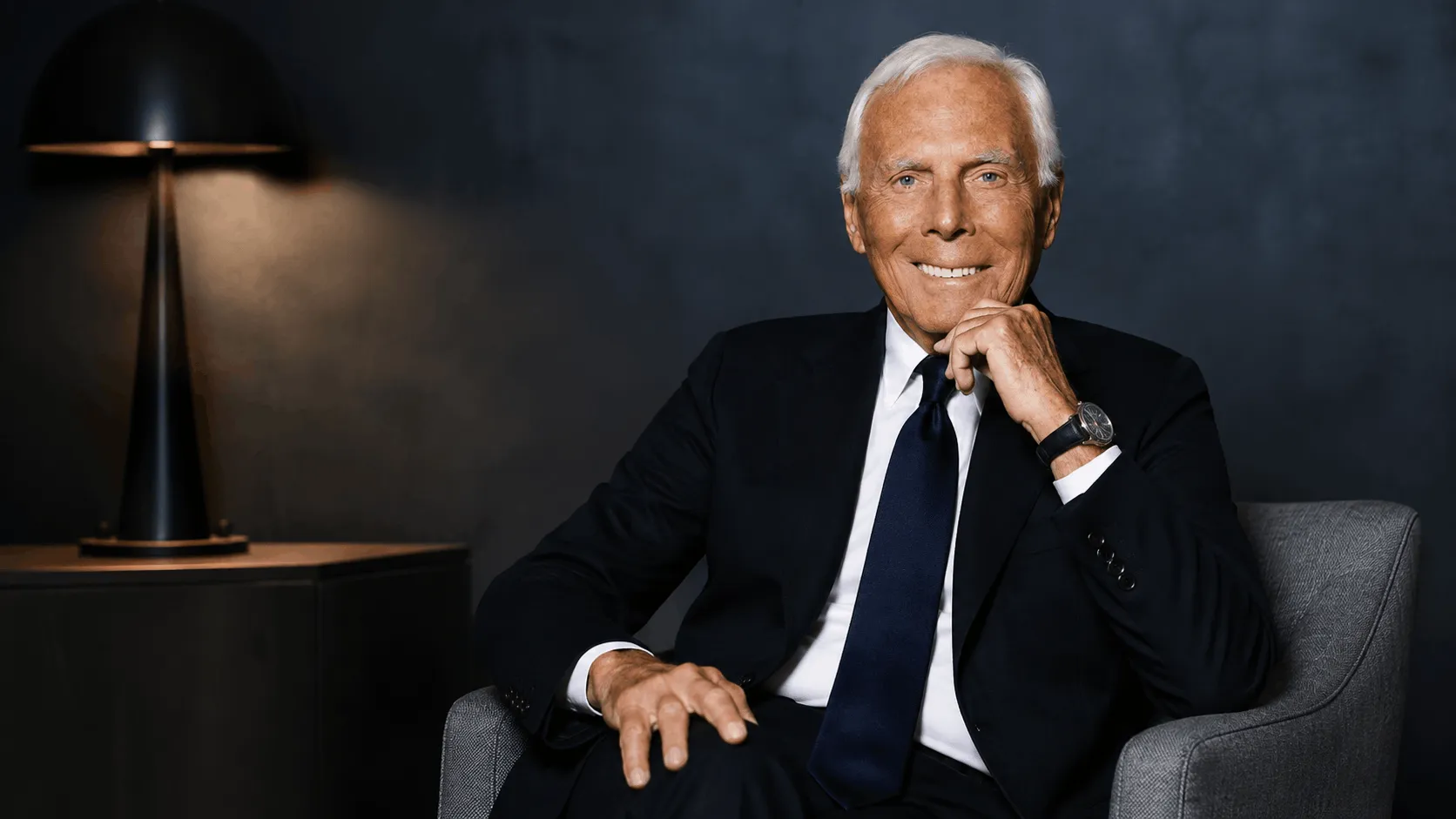
Giorgio Armani’s net worth stood at an estimated $12.1 billion at the time of his death in September 2025, according to Forbes. The fortune came almost entirely from Giorgio Armani S.p.A., the fashion house he founded in 1975 and owned outright until his final days.
Giorgio Armani Net Worth at a Glance
| Detail | Figure |
| Net worth at death | $12.1 billion (Forbes) |
| Other estimates | $8 billion to $11.5 billion, depending on valuation method |
| Profession | Fashion designer, founder and CEO |
| Age at death | 91 |
| Primary income source | Giorgio Armani S.p.A. (Armani Group) |
| Company revenue (2024) | About $2.7 billion |
| Forbes billionaire rank (2025) | #208 |
Estimates vary because Armani’s company was privately held and never published detailed financials the way a public company would. Forbes based its $12.1 billion figure on the value of his fully owned fashion empire, real estate, and other assets, while other outlets that rely on different valuation multiples for the company landed closer to $8 to $11.5 billion.
Early Life and Path Into Fashion
Armani was born on July 11, 1934, in Piacenza, a town in northern Italy near Milan, according to Britannica. He enrolled at the University of Milan to study medicine but left after a few years to complete his military service.
After leaving the army, he took a job as a window dresser and buyer at La Rinascente, a Milan department store, where he spent about seven years learning the retail side of fashion before moving into design. He later worked designing menswear for Nino Cerruti, an experience that shaped the relaxed, unstructured tailoring he would eventually make his signature.
That early, unplanned route into retail is part of why his later designs read as practical rather than purely decorative. He understood how clothes actually sold before he ever designed a garment for a runway.
Career and Income Breakdown
The 1975 Launch With Sergio Galeotti
In 1975, Armani and his business partner Sergio Galeotti sold Armani’s Volkswagen for $10,000 to fund the launch of Giorgio Armani S.p.A. The label started with menswear and added a womenswear line the following year, built around Armani’s idea of softening a man’s silhouette while giving women’s tailoring more structure.
Galeotti ran the business side of the company until his death in 1985, after which Armani took over full control and never brought in an outside partner or investor for the next four decades.
Hollywood and American Gigolo
Armani’s business turned a corner in 1980, when he designed Richard Gere’s wardrobe for American Gigolo. The film put Armani suits in front of a mainstream audience and set the pattern for the rest of his career: he understood, earlier than most designers, that dressing actors and public figures was itself a form of marketing.
Over the following decades he built costumes for more than a hundred films, including Goodfellas and The Wolf of Wall Street, and became a fixture on red carpets, dressing celebrities for award shows well before that was standard practice in the industry.
Building a Global Fashion Empire
From that menswear base, Armani expanded into Emporio Armani, Armani Exchange, Armani Privé haute couture, Armani Junior, eyewear, cosmetics, perfume, and home furnishings. By the time of his death, the Armani Group operated more than 500 standalone stores worldwide, per Business of Fashion, and had pushed into hotels, restaurants, and interior design projects carrying the Armani name.
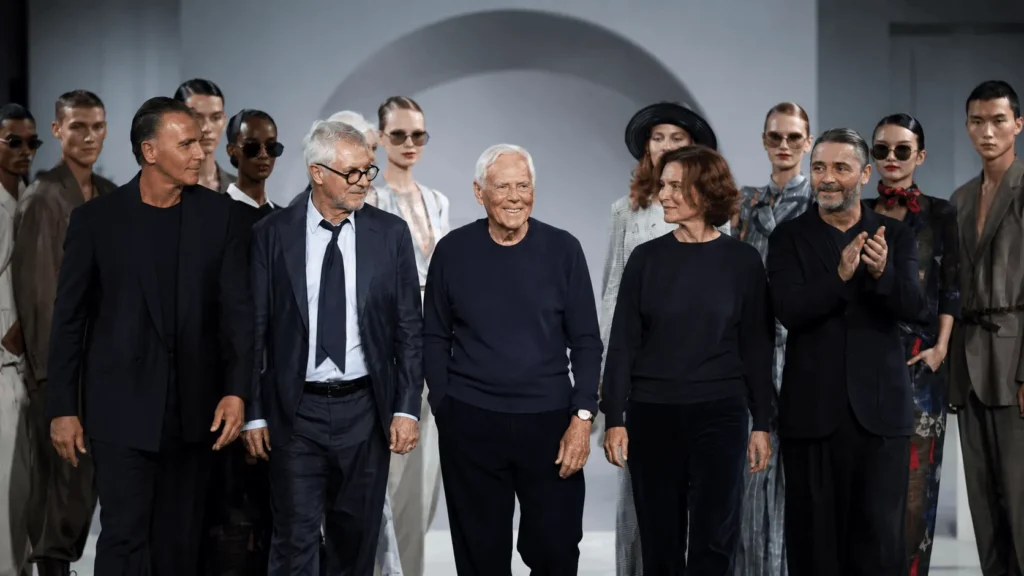
The core fashion business, which includes the Giorgio Armani, Emporio Armani, and A|X Armani Exchange lines, generated about €2.3 billion in revenue in 2024, equal to roughly $2.7 billion. Reuters reported the group’s 2024 EBITDA at $468 million, a 24 percent drop from the year before, with net income before tax of $87 million and cash reserves of $668 million at year end. Armani had also put a record $389 million that year into renovating flagship stores and building out e-commerce.
Income Sources
Armani’s fortune came from several layers of the same business rather than one product line. The core layers included the following.
Ready-to-wear and couture sales across the Giorgio Armani, Emporio Armani, and Armani Privé lines made up the largest share of group revenue. Licensing and joint ventures in eyewear, fragrance, and cosmetics added a steady, lower-overhead income stream, since those categories are typically produced and distributed through manufacturing partners rather than Armani’s own factories.
Beyond fashion, Armani earned income from Armani Hotels and Armani-branded residences in cities including Dubai and Milan, along with restaurant and interior design licensing. He also owned Olimpia Milano, an Italian professional basketball club, and had a personal real estate portfolio that included property in Italy and abroad.
Because Armani was the company’s sole shareholder for most of its history, nearly all of that revenue flowed back to him directly rather than being split among outside investors, which is a major reason his personal net worth tracked so closely with the company’s own valuation.
Notable Assets
Public reporting has confirmed a handful of specific assets tied to Armani’s personal wealth. He owned a roughly 200-foot yacht, according to Newsweek, along with luxury real estate holdings in Italy. His company also controlled Olimpia Milano, giving him a visible stake in professional sports alongside fashion.

Because Armani kept his personal finances private, an exhaustive list of his real estate and investment holdings has never been made public. Outlets that cover his estate have generally stuck to the assets confirmed through court filings, company disclosures, or his own public statements, rather than estimating figures that cannot be verified.
Who Inherits the Armani Empire
Armani never married and had no children, so succession had been a long-planned question inside the company well before his death. Under the succession plan reported by Fashion United and other outlets, the Giorgio Armani Foundation, which he established in Milan, holds the controlling stake in the company at roughly 85 percent, with LVMH expected to acquire a minority stake of around 15 percent as part of the arrangement.
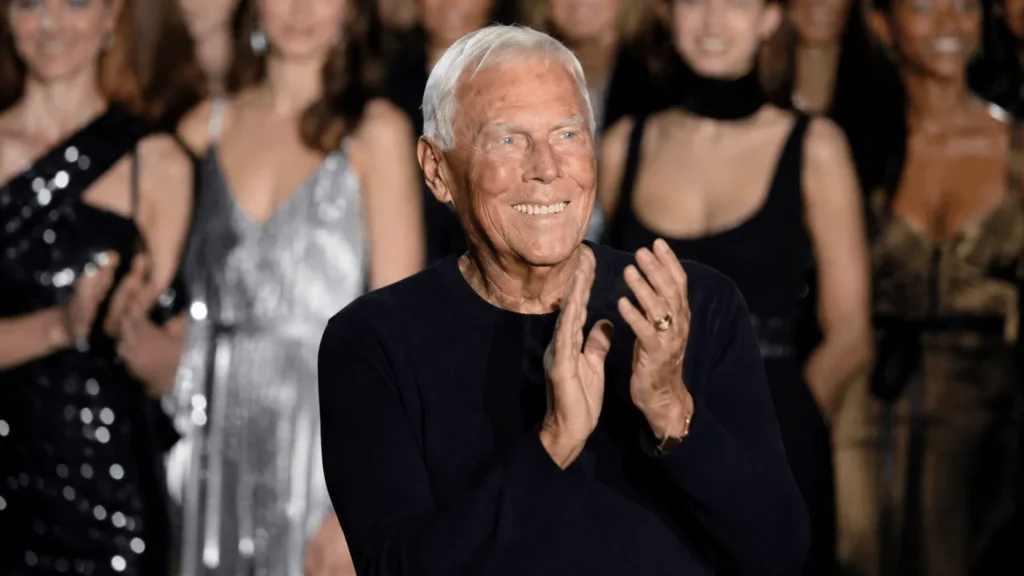
His closest collaborators and family are expected to remain involved in guiding the brand. That group includes his sister Rosanna, his nieces Silvana and Roberta and nephew Andrea Camerana, and Pantaleo “Leo” Dell’Orco, his longtime partner and one of the company’s senior designers. The structure was designed specifically to keep the fashion house independent rather than sold outright to a single buyer.
How Armani’s Fortune Compares
Armani’s $12.1 billion estimate placed him at #208 on Forbes’ 2025 list of the world’s billionaires, a notable rank given that the fortune came from a single, privately owned fashion house rather than a diversified holding company or a publicly traded conglomerate. Most fashion figures near that level of wealth, such as the founders of other major luxury groups, built their fortunes through public companies with outside shareholders diluting their personal stake.
Armani’s position was unusual because he held onto full ownership for nearly fifty years. Analysts who tried to value the Armani Group as if it were publicly traded put its market worth at roughly $8 billion to $11 billion, a range that lines up closely with the more conservative net worth estimates and helps explain why different outlets landed on different final numbers.